


The International Centre for Research in Ecological Economics, Eco-Innovation and Tool Development for Sustainability (REEDS) unit is a centre at the UVSQ (Université de Versailles Saint-Quentin-en-Yvelines), led by Professor Martin O’Connor, one of Europe’s best-known ecological economists. At the present, the centre involves about 50 researchers and it is a successor to the C3ED founded by René Passet. REEDS gives advice on policy at French, European and international levels and in corporate social responsibility. It is strong in research in African countries. It is particularly strong in the methodologies of integrated economic-environmental analysis, quantitative economic analyis, GIS and spatial analysis, risk assessment, interactive multi-media techniques (platform KerBabelTM), multi-criteria multi-actor analysis and participatory action research. It has at present twenty doctoral students. The main role of UVSQ in EJOLT will be: a) to provide theoretical inputs in issues of ecological distribution, environmental justice; b) to lead in the transversal field of valuation of environmental liabilities (WP8) and c) to conduct studies on environmental conflicts in Brazil (with FIOCRUZ) contributing to WP2.
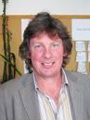 Martin O’Connor. PhD. Raised in New Zealand, with degrees in physics and biology, he became an ecological economist and has been a central figure in many European research project in this field since the early 1990s, particularly in the assessment of economic and physical indicators of sustainability (CRITINC), environmental valuation (VALSE), and the use of information technologies in grassroots application of multicriteria evaluation methods (ALARM). He wrote on post-normal science with J. Ravetz and S. Funtowicz, and edited books with Sylvie Faucheux and Clive Spash on valuation and the environment. He is also known for his work on ecological distribution and political economy. He is currently the Director of the international centre or Research in Ecological Economics, Eco-innovation and Tool Development for Sustainability (REEDS) at the UVSQ.
 Vahinala RAHARINIRINA is ecological economist with a PhD from the University of Versailles Saint Quentin-en-Yvelines (UVSQ). She is an EJOLT’s collaborator since 2012 and has conducted an inventory of the environmental injustices in Madagascar, mapping environmental conflicts in Madagascar. Her main research fields are Ecological and economic distribution, Environmental justice, Natural resources management, Environmental conflicts, Social metabolism, Deliberative Democracy and Social choice, Corporate social responsibility (CSR) and Corporate Accountability, Biodiversity governance, Sustainable development, Political Ecology.
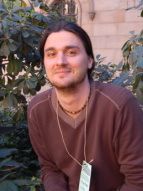 Phillippe Roman, alumnus of the ENS LSH (Ecole Normale Supérieure Lettres et Sciences Humaines, Lyon) and agrégé in economic and social sciences, is a PhD student in social and economic sciences at REEDS. After a double Bachelor degree in Sociology and Econometry, a Master of Economics and a year spent in Brazil as a guest researcher, he obtained his Master in Ecological Economics from the UVSQ (First in class, 2008-2009). He is currently a lecturer and doctoral fellow at the UVSQ, where he is completing a thesis under the direction of Martin O’Connor, entitled “Economic distribution, ecological distribution and externalities: A political ecological economics project for the diversion of the São Francisco river in Brazil.”