

Maps
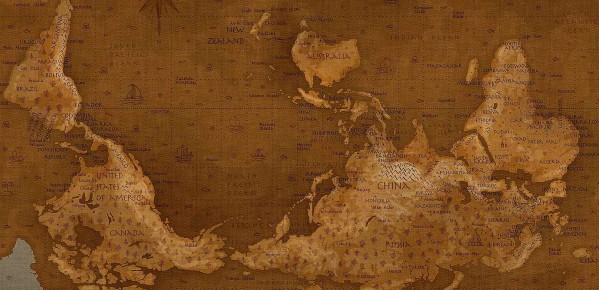
One of the primary objectives of EJOLT is to compile and make available an Atlas of Environmental Justice. The Atlas of Environmental Justice is a practical and intuitive online platform that allows searching and filtering across 100 fields, as well as browsing by commodity, company, and type of conflict. With one click you get, for example, a global map with just the world’s nuclear, waste or water conflicts – depending on your interest. In one click you find the 22 place where people have some issue with Shell or the 97 places where gold leads to some sort of conflict. Click on any point and you’ll get everything from actors and a description to mobilization, outcome and sources. Any map you create using the search and filter can be embedded on your webpage or shared with friends on facebook. In the last 3 years, the massive database behind the map has been carefully crafted by a team of over 100 scientists and activists all over the world. It promises to become a reference for scientists, journalists, teachers and activists alike.
It will allow increased understanding of what the determinants of conflicts are and how material demands and policies create potential hot spots for future conflicts. Our goal is to make visible the voices fighting for environmental justice and to bring attention to threatened communities that are often rendered powerless by institutions and ignored by the media. Try out the functions of the Atlas in the frame below or go straight to the dedicated website for the Atlas.
Finally, the map aims to investigate, understand and disseminate the causes and consequences of conflicts generated by the exploitation of natural resources, the generation of wastes and the degradation and commodification/privatization of environmental goods. The map will do this by revealing the spatiality of trade/production and consumption processes and through the visualization the connections between producers and consumers and between sources of sinks of resources, materials and energy. Through this we hope to dispel consumer blindness and suggest policy recommendations and consumption changes that will lead to more sustainable and ecological systems of production and exchange.
What are we Mapping?
In this project we map what we call Environmental Justice or Ecological Distribution conflicts — conflicts that highlight the distributive & structural impacts of economic activities on the health and environment of specific populations. The effects may be economic, health impacts, economic, socio-cultural or environmental. Most of our cases focus on cases where the communities mobilize in some way against the negative perceived effects and struggle for environmental justice , but visible mobilization in repressive regimes is not always possible, and impacts are often latent.
Definitions of Ecological Conflicts for the purposes of the database:
— Ecological distribution conflicts refer to struggles over the burdens of pollution or over the sacrifices made to extract resources, and they arise from inequalities of income and power Sometimes the local actors claim redistributions, leading to conflicts, which are often part of, or lead to larger gender, class, caste and ethnic struggles In this line, the concept of “environmental justice” is important. It was born in the United States and it has gained growing acceptance in extractive industries, water use and waste disposal conflicts all over the word. Environmental justice not only refers to the distribution of costs and benefits but it also addresses participation and recognition claims.
From: Social Metabolism, Ecological Distribution Conflicts, and Valuation Languages, Joan Martinez-Alier, Giorgos Kallis, Sandra Veuthey, Mariana Walter, Leah Temper. Ecological Economics (2010).
The cases we map come from the activist knowledge of our partner EJOs and a wide network of EJOs around the world.
In the EJOLT project, we work in several main thematic areas: Nuclear, Ore & building materials extraction, Waste Management, Biomass, Fossil Fuels and Climate Justice and Energy conflicts, but the database will also include other issues such as water, transportation, infrastructure and biodiversity. The end result will be an atlas of ecological distribution conflicts across the world – A series of maps based on the activist inventories. We will have maps both by thematic areas (gold mining maps, shrimpfarm maps) and across themes by country and region.
For example, the nuclear Work Package traces the nuclear chain – from uranium being extracted in Namibia or Malawi, to being fed into the power-plants of our European partner countries, and then perhaps ending up washing on a beach near Somalia.
To show you how we work, you can have a look at the EJOLT Database Form (in pdf or Word) currently used for entering conflicts. The EJOLT project aims to register at least 2000 conflicts through this form. If your organisation has the time and energy to work with us by filing cases in the form, then please do contact the project’s deputy coordinator Leah Temper for more information.